


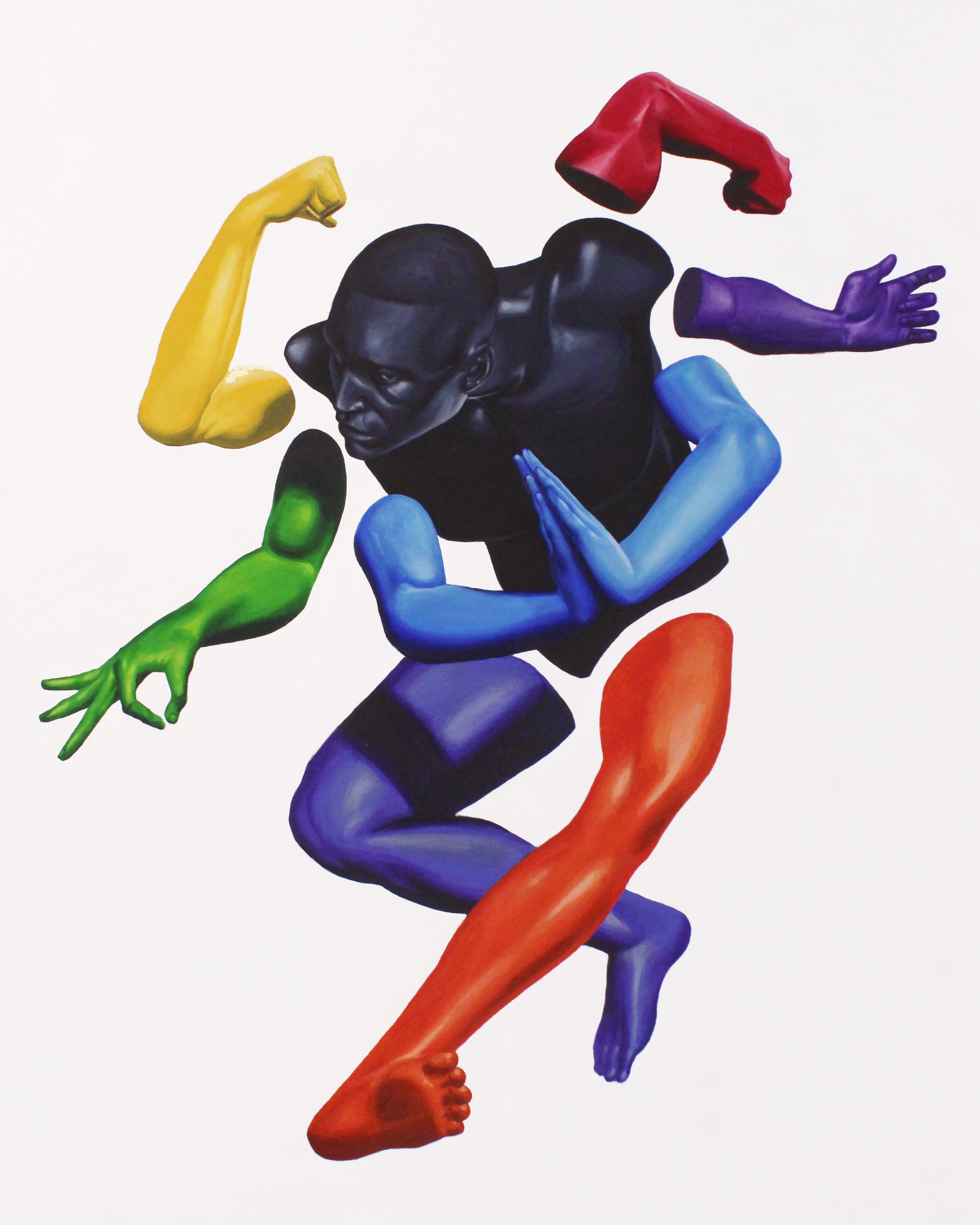
"So, what do you do?"
It's the first thing new people ask. And since we moved to LA in April, I've met a lot of new people. Every time, something in me sinks before I answer.
It's been ten months since we closed the new musical, BEAU. Ten months without a rehearsal room, a call time, a company. Somewhere in there, I felt like I had to stop saying the word actor.
That's what I want to sit with this week—what the in-between asks of us when the proof runs out.
Places.
Proof
Actor is a word that comes with a follow-up question.
What have you been in? Anything I'd have seen? Are you in something right now?
They're friendly questions. Nobody asking them means any harm. But they're asking for evidence. A show to name. A bio that starts with "currently."
When you have one, the word is easy to say. When you don't, you can feel the space open up between the word and the answer to the next question.
So we reach for softer words. Creative. Multi-hyphenate. Between projects. Words nobody can check. Nobody has ever asked a creative what they've been in.
I don't think it's dishonest, exactly. I really do write and design. But I know why I lead with them. They have evidence attached: a newsletter that goes out every Friday, a client, a deadline. It's easier to say the thing that pays the rent.
This business taught us that. You become an actor when someone casts you. The title gets handed to you from the outside, one contract at a time. And when it's been long enough since the last one, it starts to feel like someone took it back.
Outside In
In the late '60s, the psychologist Daryl Bem proposed what he called self-perception theory. When we're unsure who we are or what we feel, we look at what we do and draw our conclusions from the outside, the way an audience would.
Which means a run gives you more than a paycheck. Eight times a week, you get to watch yourself act. You never have to wonder whether you're an actor, because you keep seeing one.
Take the action away and the show you've been watching goes dark. You haven't changed. You've just lost your view of yourself.
The sociologist Robin Leidner studied exactly this: how stage actors hold on to who they are without steady work. What she found is that actors struggle to keep that identity "both in others' eyes and in their own."
Two audiences. The stranger asking what you've been in is the easy one. The harder one watches from the inside.
Call Time
I once wrote that faith needs rooms. I never thought much about what happens when you don't have one.
A run hands you a structure you don't have to build. A call time. A sign-in sheet. The same people in the same hallway every night, doing the same thing at the same hour, until it lives in your body. You don't have to decide to be an actor that day. The schedule decides for you.
In August, I spent ten days in New York rehearsing and performing at The Festival, a Broadway Coachella of sorts. It counted. It was beautiful. And it was a visit. Ten days gives you a gorgeous week and a half. A run gives you somewhere to be next Tuesday, and the Tuesday after that.
What I miss most, I think, is the showing up. Somewhere to be. People who expect you.
The in-between takes all of it at once. The place, the people, the rhythm. What's left is you, at home, deciding every single morning whether you're still the thing.
The Opposite
Anne Lamott wrote that the opposite of faith is certainty.
This business offers none. No actor knows when the next job is coming, or if it's coming at all. You can do everything right and still go a year without a room. Everyone in it knows that, and everyone in it keeps showing up anyway.
There's a version of faith that gets passed around for moments like this: what's meant for you will come. I've said it. I've had it said to me. It's always meant kindly. But it's a promise about outcomes, which makes it certainty wearing faith's clothes. And it has a cruel flip side. If the thing doesn't arrive, the logic says you weren't meant to have it.
The room asks for faith too. Every new show is an act of it. But in there, you have a company believing right alongside you. Out here, you hold it alone.
I'd love to tell you I've figured out what that looks like. I haven't.
But most of us spend more of our lives out here than in there. The run is the exception. The in-between is the job. If we only get to claim the word when we have proof, then most of us aren't artists most of the time.
And I don't believe that.
Maybe the practice looks like the next audition. Maybe it starts with the word.
So, what do you do?
I'm an actor.
This week in One Last Thing: the twenty-five words I keep coming back to when the powerlessness sets in.
It's for paid subscribers ($5/month), which keeps The Fourth Wall independent and alive. Either way, I'm grateful you're here.
See you next week ♥️
—Matt
Of course, this all applies to directors, playwrights, all onstage and off.
I got snarky one time at a business cocktail party when a lawyer asked if she had seen anything I had done on Broadway. And I said, 'no - have you tried any cases on the Supreme Court?'
Not a proud moment, but a real one.
I also say the Serenity Prayer almost every day. and I've added my own coda - 'And the grace for everything in between.'
Thanks, as always, for sharing your writing.