


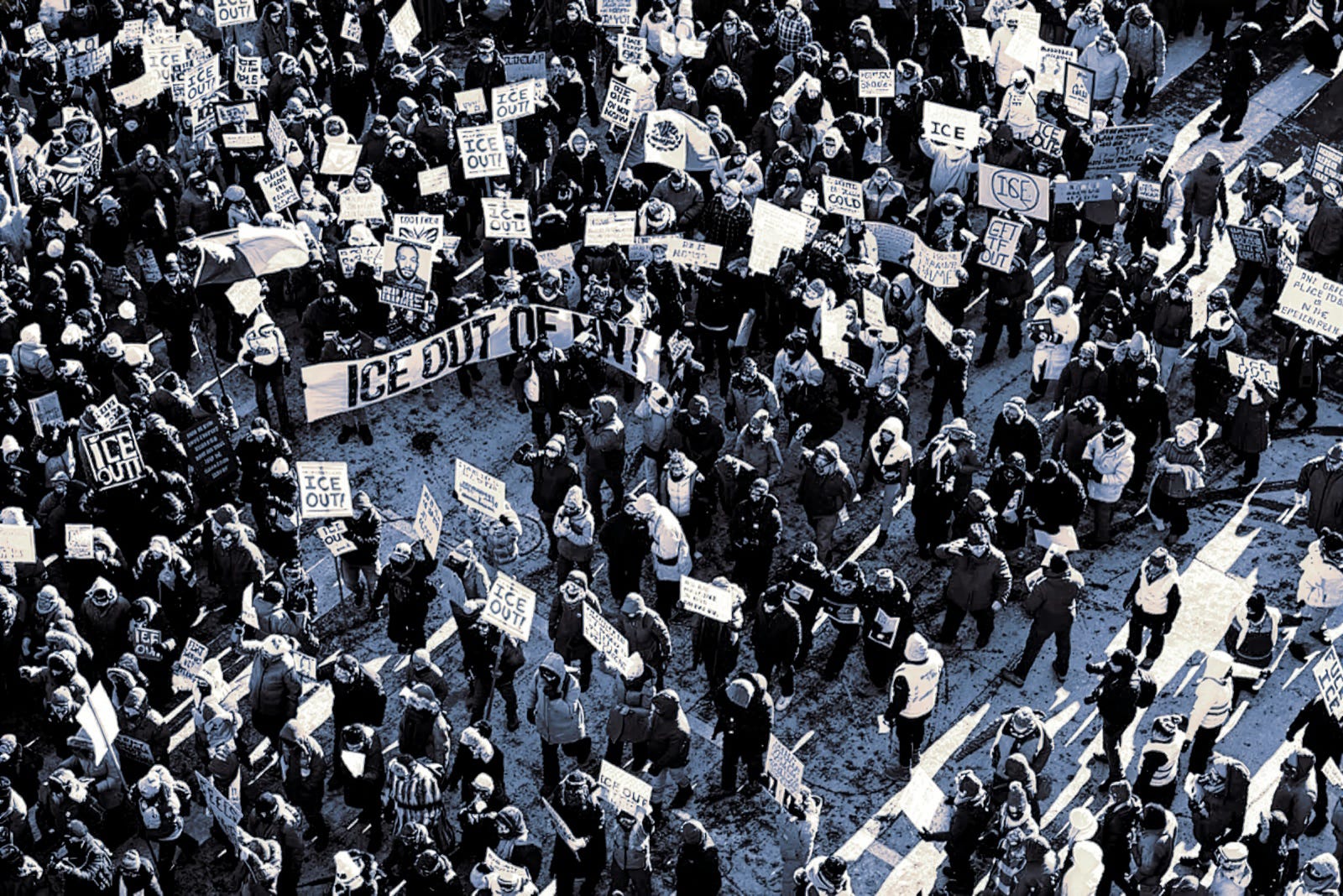
This week’s been heavy.
Watching what’s been unfolding in Minneapolis, and in cities across the country, has been horrifying. For me, and maybe for you, there’s been a constant internal negotiation. How much to read. When to step away. How to stay informed without becoming numb. How to care without turning other people’s suffering into something I passively consume.
There are concrete things to do: calling representatives, donating, protesting, checking in on friends and family. Those actions matter. And yet, even after we’ve done them, there’s a kind of residue. Feelings that linger.
In moments like this, showing up to the theater, listening to music, watching a movie or TV show, even writing a newsletter can feel strange. Out of step. Indulgent. Inappropriate. When harm is happening this visibly, it’s hard not to question whether creating things—or art as a whole—actually matters at all.
I don’t know if there’s a simple or clean answer.
So this week, I don’t have an argument or a conclusion. What I have instead is an offering: some unpolished, unfinished thoughts about the relationship between art and suffering—and why sitting with that question feels necessary right now.
Here we go.
Part of what makes moments like this so difficult is the sheer volume of exposure.
We’re living in an age of constant information—headlines, stories, “real-time” updates—where suffering is served to us on an endless loop. There’s almost no space to process what we’re taking in before the next notification pops up.
Psychologists have said for years that as the scale of suffering grows, our emotional response often shrinks. Not because we don’t care, but because the human nervous system isn’t built to sustain this much empathy for this long.
So the mind does what it has to do to survive. It creates distance. It flattens feeling. It turns pain into something we can register without having to fully metabolize it.
We find ourselves caught in a quiet tension: the desire to stay informed and the need to protect our hearts. To see enough of what’s happening to stay awake, while also carving out enough internal space to hold the rage, sadness, and confusion.
What we’re craving isn’t total clarity, just a way to stay present with what we’re already carrying.
Enter: art.
A song turns feeling into melody. A play compresses years into a couple of hours. A painting isolates a moment or a color. Choreography translates energy into gestures and shapes.
Art gives emotion edges. When so much of what we consume sands down suffering into something we can scroll past, art concentrates feeling instead. It gives it form and duration.
Rather than absorbing the whole world’s pain at once, we’re invited to sit with one human experience, one emotional truth, one story—and stay long enough for something to move through us rather than pile up inside.
This is why rituals exist across cultures. Why mourning has ceremonies. Why grief has songs. Why anger has drums. Why prayer has structure. Why storytelling has arcs.
In a quiet, essential way, art organizes pain. It makes it holdable. It gives feeling a place to enter, and a way to exit.
Art is not an antidote to suffering. But it may be what keeps suffering from becoming infinite. What keeps despair from hardening us.
For the person making the work, art becomes a way of moving feeling into form. For the person encountering it, the work becomes a place to move through feeling in response. The labor is different, but the exchange is real. The work carries the imprint of someone else having already gone through something human—and invites us to do the same.
This is part of why people often describe art as an escape.
After moments of collective trauma, people need somewhere to go. Somewhere to sit together. Somewhere time can move forward. Somewhere attention can rest, even briefly, without going numb.
Broadway reopening on September 13th, 2001.
Communal singing at vigils after countless school shootings.
Streets turning into galleries after George Floyd’s murder.
That kind of escape isn’t about forgetting what’s happening. It’s about relief. About stepping out of constant vigilance and into a space where feeling can flow without overwhelming us.
Art asks for participation, not avoidance. Sometimes that participation looks like effort: staying with discomfort, emotion, complexity. Sometimes it looks like rest. Both are part of the same practice. Both restore the capacity we need to remain open, responsive, and ready for what comes next.
Which brings me back to Minneapolis.
None of this resolves what’s happening there—or anywhere else. It’s infuriating. And confusing. And deeply saddening. And in moments like this, when suffering feels endless and helplessness sets in easily, staying present matters more than ever.
History shows us that harm accelerates when people are encouraged to look away. To disengage. To harden. To accept what’s happening by slowly withdrawing from it.
The work ahead will require the opposite: attention, connection, and a commitment to seeing the humanity in one another.
Art is a place we can practice all of that. Not instead of action—but alongside it.
See you next week ♥️
—Matt