


When I launched The Fourth Wall a little over a year ago, I was determined to focus on the social media and marketing side of Broadway. I wanted to create a space where that side of the industry wasn’t hidden in the margins, but examined openly. So we could all see what was working, what wasn’t, and why it mattered.
Since then, the scope of this newsletter has expanded far beyond screens and feeds. But theater marketing remains one of the places my curiosity keeps returning to. Especially because, for all the attention social media gets, the industry still seems unsure how much power it’s actually willing to cede to it.
So when Katharine Quinn announced she was formally splitting her company into two distinct offerings—And That’s Showbiz, a Broadway media outlet, and And That’s Strategy, a boutique social media agency—my antennas went up.
It’s an unusual combination. One speaks directly to fans. The other advises producers. Taken together, it creates a vantage point that’s rare in this industry—one foot in the conversation shaping Broadway online, and one foot inside the rooms deciding how shows are sold.
I wanted to understand what drove the split. But more than that, I wanted to understand what the last few years of Broadway internet culture have actually changed about how shows are built, marketed, and sustained.
Let’s get into it.
The Accident
Matt: From the outside, the split felt very intentional. When did you realize this needed to become two separate companies?
Katharine: Honestly, none of it was planned.
And That’s Showbiz was always meant to be a Broadway digital media outlet. That was the original idea—red carpets, insider access, prestige content for Broadway. It wasn’t meant to be an agency.
Then Gatsby happened. I used And That’s Showbiz to start posting content for the show, and it became the strategy arm almost by accident.
At a certain point, two years in, I looked around and realized I had two different businesses living under one brand. Strategy is B2B—it’s advising producers and creative teams. Showbiz is B2C—it’s speaking directly to fans. Formalizing that felt necessary.
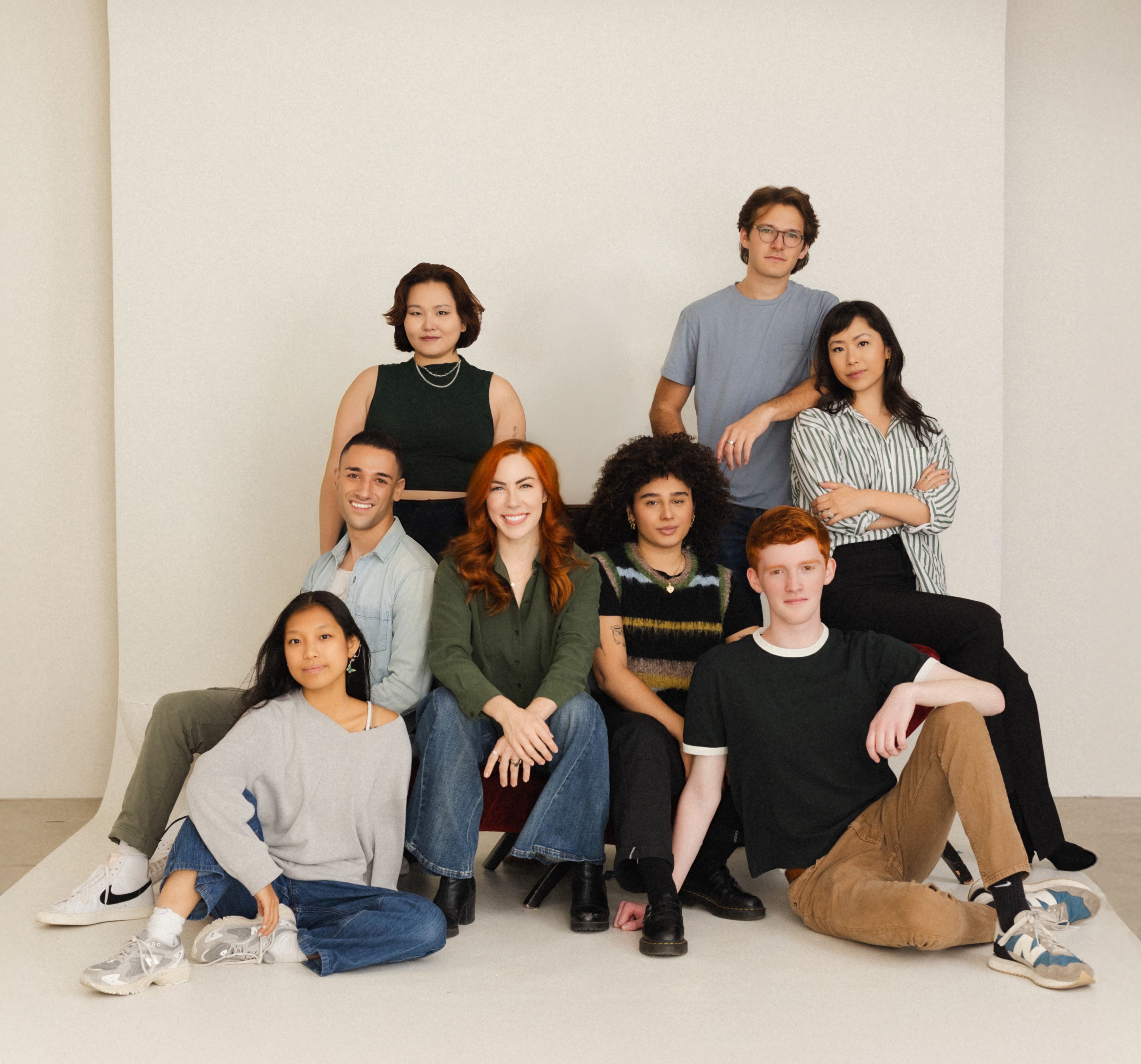
But it wasn’t just structural. I also wanted to make it very clear that And That’s Strategy is a team of brilliant minds. I wasn’t interested in this being the Katharine Quinn Show. These companies are made up of incredible people. So many times I get complimented on content that wasn’t my idea. The brilliant ideas and execution are being handled with great care by other people. I have a team of genuinely sharp talent, and I wanted the company structure to reflect that.
The Gap
Matt: On the Showbiz side—what gap were you seeing?
Katharine: I love prestige content. I grew up watching director’s cuts. I compulsively watch every Hollywood Reporter roundtable. Every Variety Actors on Actors.
And it felt like Broadway didn’t have much of that. We have news. We had ticketing sites. But not a lot of curatorial voice. Not a lot of opinion and editorial. Not a lot of deeper, long-form conversation about process.
There’s more of it now, and that’s exciting. The climate has shifted dramatically in the last two years. But at the time, it felt like there was space for something that wasn’t just transactional.
And part of that comes from how deeply I believe Broadway fandom is underestimated.
Broadway fandoms are essential to the core of our business. Even if you’re going to be a capitalist about it—it benefits everyone to listen to fans. They are online, telling you exactly what they’re responding to. They’re literally a focus group.
That belief—that fans are not peripheral to the business but central to it—kept surfacing throughout our conversation. It informs how Katharine thinks about both sides of her company. And it’s still, she told me, a harder sell than you’d think.
Matt: I feel like that belief informs both sides of what you do.
Katharine: It does. And it’s still a hard sell sometimes.
There’s a perception that fans aren’t average ticket price buyers and therefore somehow less valuable. I just don’t believe that. They are deeply invested. They come back. They bring people. They evangelize.
For example, people knew the New Money dance before they even came to see Gatsby. There is so much opportunity to build these brands online—and so much of it is still untapped.
If you don’t invest in community, your marketing is built on a house of cards. Fans are the core. They’re the magma, the core. Everything else builds out from there—influencers, press, celebrity, audience. But if you’re hollow at the center, the rest collapses.
That image stayed with me—fans as the molten core, the thing everything else builds out from, not the afterthought at the end of a marketing plan. In most rooms I’ve been in, the conversation starts with press, moves to celebrity, then to advertising. Community, if it comes up at all, is last. Katharine is arguing it should be the foundation.
But that only works if the data backs it up. So I asked her about the numbers.
The Funnel
Matt: What metrics is your team focused on—and is that different than what gets shared with producers?
Katharine: A huge part of our job now is education.
I have learned how to explain to producers of a certain age what a meme is. I’ve learned how to explain why it matters. I’ve learned how to explain that social isn’t just one person sitting in a corner on their phone.
When people ask if social sells tickets, I typically ask: how do you track billboard impressions? It’s an awareness tool. It’s part of a funnel. Social is the same—except it actually hits every part of the funnel. Awareness, reach, consideration, conversion. Organic social amplifies paid. You can click the link and purchase. Organic social creates press beats and highlights the ones that already exist. Social is quite literally the whole funnel.
On Gatsby, we’d see unexplained spikes in web traffic. And then we’d look at Instagram and see that a video had gone viral that day. Post-show surveys listed social as one of the top reasons people came.
Nobody questions a billboard buy, or a Times Square placement, despite the fact that measurement is essentially impossible. A full page Times ad in 2026 is a vanity buy. The impact of that forty thousand dollars would look very different coming from social.
Matt: When you talk about social hitting every part of the funnel—are you thinking more about brand building than selling tickets?
Katharine: The primary objective is to build the brand. Build the world of the show. Find the community and foster it. Let them know they are valued, that you’re listening.
Sometimes other parts of the marketing team need us to post something that looks like a paid ad on the feed, and that’s part of the job. But the primary work is world-building.
And I think if your marketing is only awareness and not community building, you’re ignoring 62% of your audience who don’t even live in the tri-state area. You’ve ignored everyone who isn’t physically walking past your billboard every day.
The Proof
Matt: If you zoom out—what feels structurally different about Broadway marketing now compared to even two years ago?
Katharine: When we started posting at volume on Gatsby, Broadway cadence was around two posts a week. Maybe. We were posting twice a day, six days a week, across six platforms. Seventy-two touch points a week. I did that for two years straight without missing a beat. And that doesn’t begin to touch the dozens of long-form videos we put on YouTube.
Nobody was doing that. I had an opportunity to demonstrate something—do a proof of concept, especially at Paper Mill. We got 75,000 followers during our out of town, which at that point was unheard of. Paper Mill gained 10,000 followers. Eva and Jeremy both gained thousands.
I had to make big swings like that because—who the hell was I? They literally called me “that TikTok girl.” And now we’ve built a reputation, which is incredibly fortunate. But so much of it was educating and explaining and proof of concept and gently taking people who aren’t familiar with these platforms by the hand and showing how powerful they can be.
Matt: And now? Has the rest of the industry caught up?
Katharine: Everyone understands social has to move faster now. But platforms are moving faster too. Producers are just now warming up to TikTok—as the platform is imploding. In a meeting last week, someone said investing in paid on TikTok is a great idea. We were having that conversation two and a half years ago. The industry is catching up, but platforms don’t wait.
What’s changed structurally is that social is no longer optional. It’s not experimental. At some point, every team realizes how important it is to their word of mouth, digital worldbuilding, reach, and longevity as a brand.
The Loop
One of the things that makes Katharine’s model unusual is that her two companies aren’t just separated—they can also work together. A strategy client might debut a piece of content through the Showbiz platform. And Strategy has taken a more content-forward, long-form approach than almost any other agency in the space—on Gatsby, they produced a creative team roundtable that runs an hour and a half. On Maybe Happy Ending, they took the writers back to NYU where they first met. It’s the kind of work that usually lives on the media side, not the agency side.
But the more interesting question is what flows the other direction.
Matt: Does running Showbiz actually change how you advise Strategy clients?
Katharine: Constantly. We’re watching fan sentiment in real time—what’s landing, what’s being ignored, what’s building organically. That intelligence feeds directly into how we build content strategy for shows. It’s a feedback loop.
Which brings up a question about positioning. Broadway marketing is increasingly being piecemealed out—influencer marketing here, organic social there, digital advertising somewhere else. Where does a boutique agency fit in that landscape?
Matt: What do you see as the value of a boutique agency versus a larger firm?
Katharine: I think there’s a place for everything. And the good news is, it’s now not uncommon for other agencies to welcome us in alongside them. They know our organic content performs, that it gets press pickup, that it feeds the rest of the funnel. The collaboration can truly be net positive for all parties partnering.
And I think there’s room for multiple agencies on a show. More creativity, more perspectives.
But I also think sometimes you want to go to the farmer’s market instead of Whole Foods. Everything we do is curated. We’re building a company culture around what we believe in and what differentiates us. And we’re selective because the work requires it.
Through talking to Katharine, it became clear to me that the split between Showbiz and Strategy wasn’t just a business decision. It’s a reflection of something that’s been changing in Broadway for a while now—the distance between the people who understand the audience and the people making decisions about how to reach them is shrinking.
For a long time, those were separate worlds. The conversation happening online among fans lived in one place. The rooms where marketing budgets were set and creative campaigns were built lived in another. And rarely did information flow cleanly between the two.
What Katharine has built—whether by design or by accident—is a company that sits at the intersection. And that intersection is, I think, where the most interesting questions about Broadway marketing live right now.
Not “does social sell tickets?”—but what happens to a show’s identity when the people shaping its online presence actually understand the audience they’re speaking to? What happens when fan intelligence isn’t an afterthought but a starting point? What changes when the person advising producers on strategy is also the person watching, in real time, what fans care about?
I don’t think we have full answers yet. But Katharine does have a sense of where things are headed:
The next phase is building the infrastructure to scale what we’ve proven works—without losing the quality that made it work in the first place.
She’s been right before.
This week in One Last Thing: intersections, Frankenstein's monster, and what it means to own the way you see the world.
It's for paid subscribers ($5/month), which helps keep The Fourth Wall alive and independent. Either way, I'm grateful you're here.
One last thing…
For most of my life, I wanted people to know what I could do. My voice. My set of skills. The question in every audition room or job interview was always some version of: how well can he do the thing?
There’s a clarity in that. And for a long time, I didn’t know I could want anything else.