


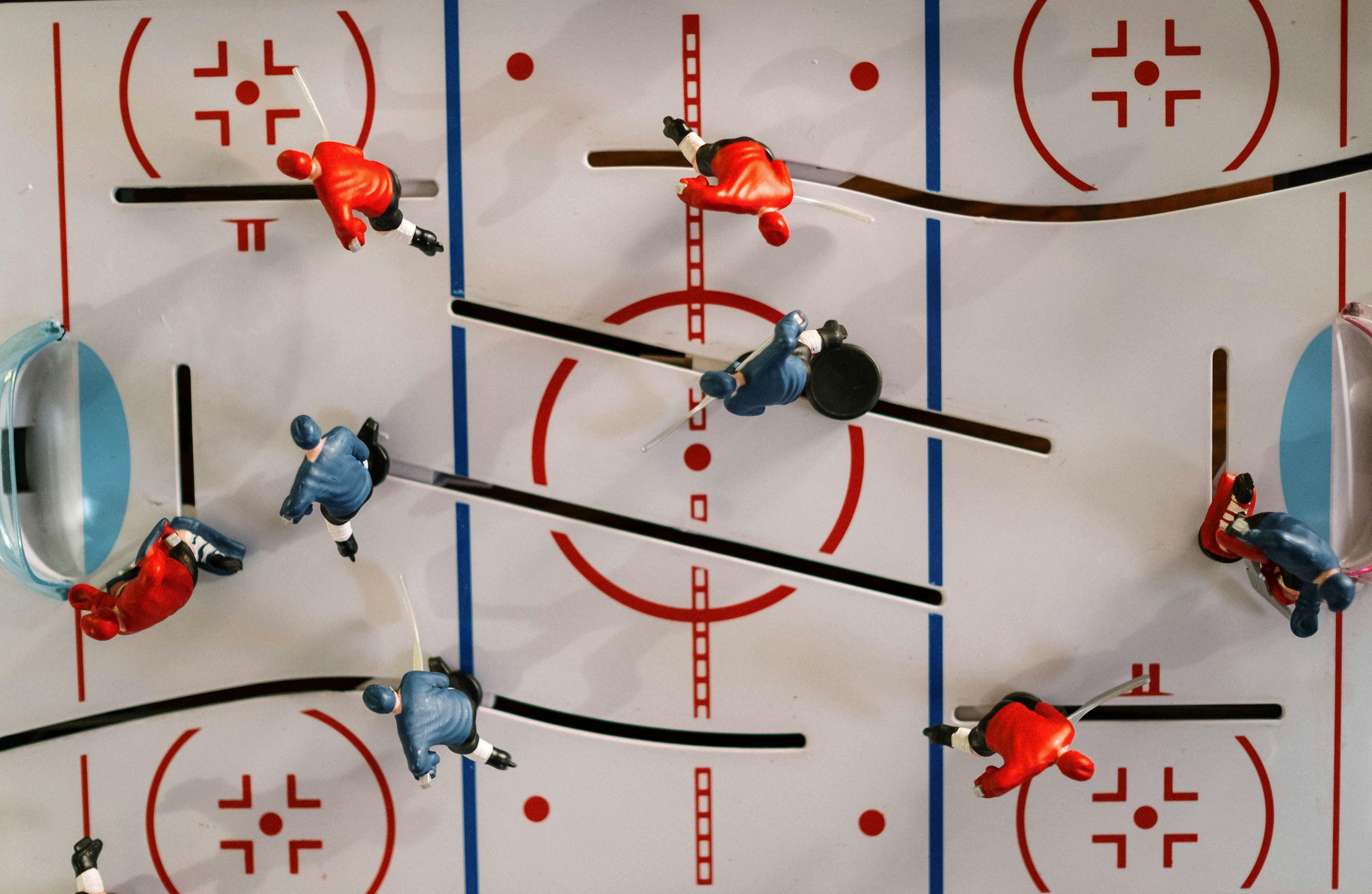
Sports metaphors get a bad rap in creative spaces. They’re usually deployed to sell grit and hustle, or some vague promise of eventual victory. Winning.
But I think “shots on goal” deserves a recontextualization.
In a creative life, ‘shots’ are acts of participation. An audition. A TikTok. A first draft of a pilot. A messy pitch deck. A voice note you record instead of just thinking about recording. All the big swings and the small attempts.
The ‘goal’ is more elusive. It moves and changes depending on where we are in our careers. It can be dictated by what we think will be perceived as a win. It’s unstable and unsustainable as a north star.
But what if ‘scoring a goal’ wasn’t the whole goal? Do the shots themselves have inherent value?
Spoiler alert: very much yes.
There’s a quiet accumulation of skills and stamina. There are internal shifts that come from simply staying in motion—whether or not we book the job, go viral, or get the yes.
So that’s what I want to sit with this week. What all these ‘shots’ are doing to (and for) us, independent of outcomes.
Ready set here we go.
We are surrounded by scoreboards.
Some of them are explicit: callbacks, bookings, views, likes, offers, opens, closes, and whatever else our younger selves decided counted as a “win.” Others are more ambient—who’s always working, who’s been quiet, who seems to be “having a moment.” Together, they create a sense that progress needs to be legible, provable, trackable.
It makes sense that we internalize all of this. Most creative ecosystems are organized around outcomes—attention, appreciation, awards. Over time, we’re trained to look outward for confirmation that we’re ‘in the game’ at all.
The problem is that outcomes are volatile. They’re shaped by timing, taste, budgets, algorithms, gatekeepers—variables that are real, powerful, and largely outside our control. Two identical efforts can produce wildly different results depending on when and where they land. And even then, “success” remains subjective.
Still the scoreboard blinks.
Slowly, it becomes the primary driver of whether we move at all. Sometimes disguised as patience. Or discernment. Or “waiting for the right moment.” We start to wonder whether the effort is even worth it. Action becomes conditional—taken only if the outcome feels promising enough.
The question shifts from what do I want to make? to what’s most likely to work?
And in that shift, it becomes easy to miss what’s actually happening underneath—the part of the work that was never meant to be counted by a scoreboard in the first place.
Every shot functions as a rep.
Not metaphorically. Literally. In the body. In the nervous system.
Each audition, each tape, each draft, each thing you make that asks you to make a move without certainty. Organize your energy. Tolerate the exposure. Recover afterward. Return to baseline. Try again.
You get faster at beginning. At moving from idea to action. The gap between thinking about making something and actually making it shortens.
Your tolerance for uncertainty widens. Rejection still stings, but it stops feeling catastrophic.
And you start learning things you can only learn through experience. What energizes you. What drains you. Your instincts sharpen. Your taste clarifies. Your natural voice emerges.
None of that shows up on a scoreboard.
But it does accumulate internally. Each rep subtly lowers the stakes of the next one. Each attempt makes the next attempt feel less precious, less loaded, less like a referendum on your entire worth. The work starts to feel more familiar, more ordinary. Something you do, rather than something you beg or brace for.
What repetition actually produces is far more than just a consolation for the ‘shots’ that don’t ‘score’. It changes the story we end up telling ourselves about our own effort.
The question shifts from will this work? to what is this building? And underneath ambition, something steadier and more sustainable takes shape.
Wanting to score isn’t the problem.
If we’re talking about shots on goal, then scoring is part of the game. It’s why you take the shot in the first place. No one lines up, shoots, and genuinely hopes it doesn’t go in. The goal matters. It gives the effort direction.
The trouble starts when shots only count if they score.
When that’s the rule—spoken or unspoken—every attempt carries too much weight. Misses don’t just miss, they completely disappear. They stop registering as part of the work at all. Which, understandably, makes it harder to stay in the game.
But when we can see what shots are doing even when they don’t go in—how they build timing, confidence, familiarity, trust in our instincts—the effort stops feeling so fragile.
We’re still aiming. We still want the goal. That desire doesn’t go away. But our attention shifts back to the shot itself. The mechanics. The feel of taking it. We stay in the rhythm of the game instead of constantly checking the scoreboard.
And paradoxically, scoring becomes more likely. Not because we stopped caring, but because we stayed with the process long enough to actually get better at it.
The goal is still there. It just isn’t the only thing that makes the effort count.
Most creative lives aren’t decided by a single shot. They’re shaped by the willingness to keep taking them.
Some will go in. More probably won’t. And most of the time that part is out of our control.
What we can control is whether we keep shooting.
So if you’re filming self-tapes, or writing drafts, or pitching wild ideas to friends, or doing anything that requires you to take the risk of trying—it counts.
Not because it racks up your metaphorical ‘score’, but because it means you’re still in the game. Still playing. Still growing.
Which, honestly, feels worthy of at least a few mildly obnoxious airhorn toots.
Starting this week, One last thing will be available exclusively to paid subscribers. It’s the most personal part of the newsletter—the place where I reflect on how the ideas above are showing up in my own life—and paid support is what keeps The Fourth Wall sustainable. If you’ve been enjoying the newsletter, I hope you’ll consider joining. Either way, I’m genuinely grateful you’re here.
One last thing…
I took a shot and missed this week.
