


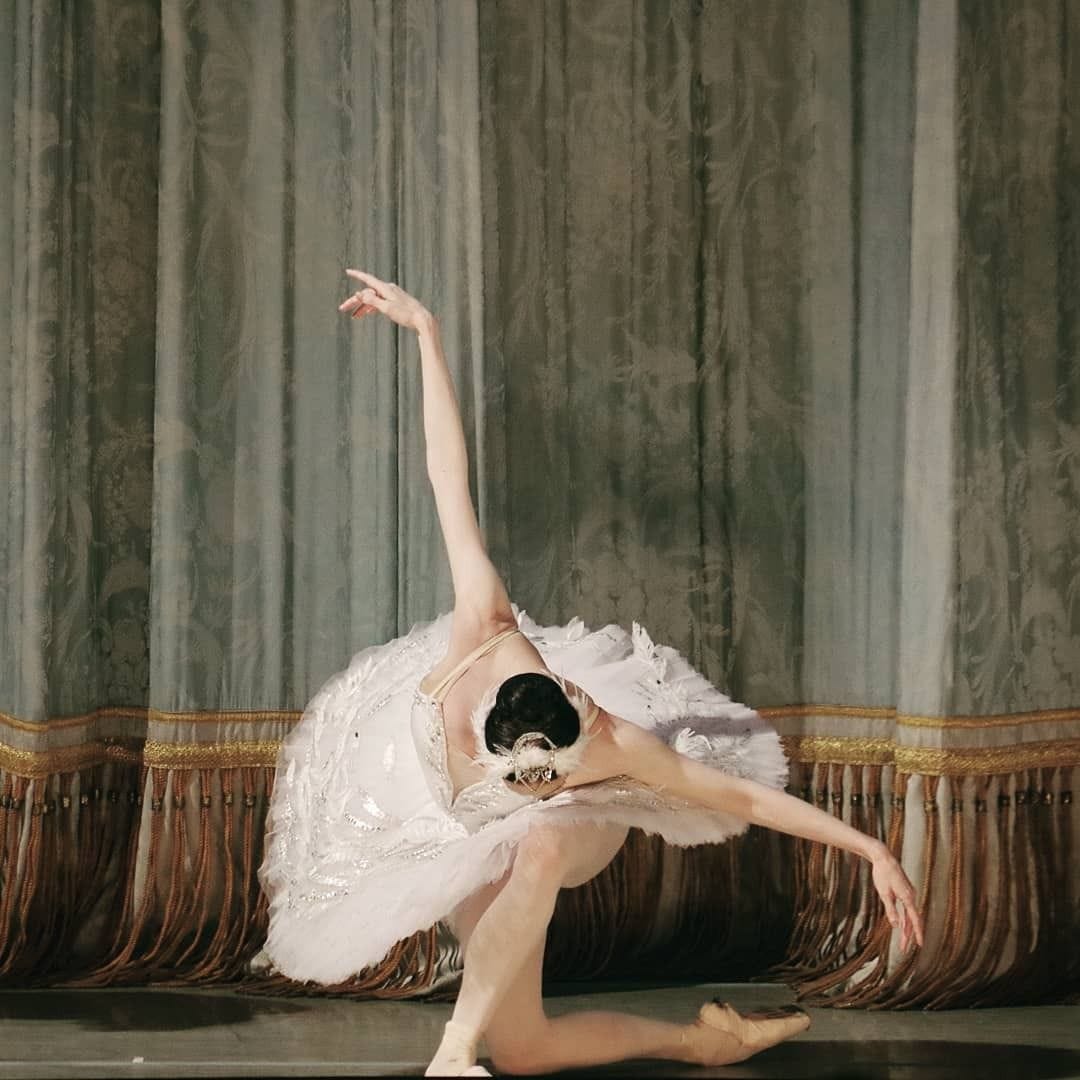
Theater people are fluent in giving thanks. We bow, we applaud, we stage-door, we stand-ovation. Or ovationally-stand?
And these aren’t just cute traditions. They’re rituals—ancient ones, honestly—that do something to us. Something that shifts us, connects us, opens us. It’s like there’s a part of us that craves those moments of intense connection, and Gratitude is the mechanism that gets us there.
So in this Thanksgiving edition of The Fourth Wall, I’m poking at the science, the spirit, and the strange magic of Gratitude—and why these familiar end-of-show moments might matter more than we think.
Geronimo!
The Inheritance
If you strip theater down to the studs—before the curtains and critics and cold brew in the green room—it started as ritual. A circle. A story. A group of humans gathering to make sense of the world together.
And rituals have always had two ingredients: attention and thanks.
The Greeks poured libations before telling their stories. Indigenous cultures made offerings to the land before beginning ceremony. Medieval mystery plays opened with prayers. Even early commedia troupes had pre-show gestures that weren’t about warming up—they were about orienting themselves to the moment.
Across cultures and centuries, people paused before creating or receiving meaning. To mark the moment. To acknowledge the forces—seen or unseen—that make gathering possible. To say: something is about to happen, and we’re grateful to be here for it.
Theater inherited that impulse.
So when we talk about gratitude in the arts, we’re not talking about manners. We’re talking about lineage. About something humans have been doing for thousands of years to prepare the body and mind for meaning-making.
Gratitude isn’t just something we express. It’s something we practice—often without knowing we’re doing it.
And once you start looking at these gestures as more than tradition, you begin to see them for what they actually are:
Tools. Technologies. Inherited mechanisms designed to shift our internal state.
Which is where this gets interesting.
The Rituals
A bow is easy to misread as an invitation—a polite “your turn” to the audience. But that’s not what’s actually happening. A bow is the performers’ way of physicalizing their gratitude. It’s “thank you for being here,” “thank you for your attention,” “thank you for participating in this.” It’s a gesture of recognition: a quiet surrender, a soft acknowledgment that whatever happened here wasn’t created by us alone. It came through us, but it was completed by you.
Understanding that helps us see applause differently, too. On the surface, applause reads like approval—the audience’s way of saying “well done.” But underneath, it’s a response to what passed between us. It’s a thank you to the performers as vessels, not just laborers. When an audience applauds, they’re recognizing that the creation they just witnessed wasn’t solely the product of skill or rehearsal or talent. It was something more ephemeral. Applause honors both the human effort and the intangible force that made that effort feel like more than craft.
In that sense, applause is a mirror of the bow. The performer says: thank you for your presence. The audience responds: thank you for being a conduit. And somewhere in that exchange, both sides acknowledge that the real star of the evening wasn’t any of the individuals involved—it was the moment itself: the unrepeatable combination of people, breath, and energy.
So if the bow and the applause reveal what we’re exchanging and acknowledging, the next layer is understanding what these moments actually do to us—chemically, emotionally, spiritually. Because gratitude isn’t just symbolic. It’s physiological.
The Bodies
When scientists study gratitude, what they’re actually studying is what happens to the body when we feel connected—to another person, to a moment, to something that feels larger than ourselves. Gratitude shifts our chemistry almost immediately. Cortisol drops. Serotonin and dopamine rise. The nervous system regulates. Our attention widens. Our breath deepens. The body stops scanning for threat and starts looking for meaning.
This shift isn’t subtle; it’s structural. Gratitude creates the internal conditions for openness, attunement, and receptivity—the very qualities we ask of ourselves as artists and audiences need in order to actually receive what’s happening onstage.
The gestures (bows, applause) don’t just mark an ending; they pull us into coherence. They synchronize us. They move us, collectively, into a state where we can sense each other more clearly. Gratitude primes us for connection, which is why these moments hit different. The body recognizes them as safe and meaningful.
This is the physiological magic of gratitude: it prepares us. It tunes our instrument. It tells the mind and the body, “You can be here now.” And once that shift happens—something else becomes possible. Something relational. Something creative. Something slightly beyond the grasp of language.
This is what every gratitude ritual, across every culture and every era, has been trying to do: move people into a state where they can actually feel the moment they’re in.
The Remembering
Gratitude has always been part of the theater, but maybe not for the reasons we assumed. It isn’t just a gesture or a tradition or a polite way to end an evening. It’s a technology. A way of tuning ourselves to one another. A way of preparing the body for presence. A way of acknowledging the invisible currents that move through us when we gather.
Which makes sense, because theater has always been a place where something larger than the sum of its parts shows up.
So if this week is about giving thanks, maybe what we’re really doing is remembering the rituals that make us available to each other.
Remembering that gratitude isn’t a nice-to-try in a creative life. It’s an essential ingredient.
One last thing…
My first memory of the word “Gratitude” is at 16, listening to Jason Mraz like he was a fedora-donning prophet. I became obsessed with the idea of being grateful—full hyper-fixation mode.
I definitely didn’t understand it, but something in me woke up.
Gratitude gave language to a feeling I’d had for years without knowing how to name it: that there was something beyond the tangible, the measurable, the five-sense reality I’d been handed. A kind of quiet “more-ness” I didn’t yet have the vocabulary for.
In that way, gratitude was my gateway drug to spirituality.
What followed was nearly two decades of exploring that doorway. Heartbreak, Love, loss, drugs, silent discos, and an immeasurable number of conversations all nudged me deeper.
I’m not hunting for answers as aggressively as I once did. I’ve learned to catch peace in pieces of music, to find guidance in all kinds of scripture, to let Sondheim songs wash over me when I need a reset. The frantic digging has slowed. The itch itches less.
But whenever I do lose my footing—when I inevitably feel unsteady or like I’m totally lost in the wilderness—Gratitude is always what I return to. It is home base. It allows me to appreciate, dare I say Love, the miracles and the mundane. It is neutral, stable ground. It connects me back to my body, my breath, and the belief that something bigger than me might be steering the ship.
So let me take this moment to thank you, reader, for whatever string of improbable events brought you to this exact sentence. For the life you’ve lived, the memories you’re carrying, the ideas you’re marinating on, and the Love you’re made of.
I am, sincerely, eternally grateful.
See you next week ♥️
—Matt